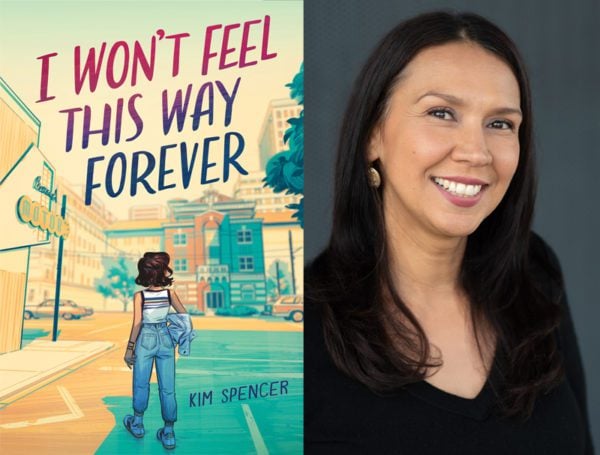
I Won’t Feel This Way Forever is the sequel to Kim Spencer’s award-winning book Weird Rules to Follow. Readers follow Mia as she shares her life in short vignettes – almost like diary entries – in the summer of 1989. Through these, we learn about her relationship with her grandmother, her Indigenous heritage, and her still-complicated feelings about her fractured friendship with her former best friend, Lara.
Although her family lives in Prince Rupert, when Mia’s grandmother falls ill, she must go to Vancouver for treatment. To keep her company while she’s hospitalized, Mia drives down with her mother and aunts. While in Vancouver, Mia begins to play basketball – a sport she loves, but stopped playing to avoid Lara – at the Native Friendship Centre. It’s a much-needed distraction from her grandmother’s cancer diagnosis and declining health.
The basketball club coach, Ember, serves as a role model for Mia. Through Ember, Mia’s appreciation for her grandmother and the knowledge her grandmother has passed on to her grows. It’s even more tragic, then, when Mia learns that her grandmother won’t be getting better; the doctors have done everything they can and all that’s left is for them to return to Prince Rupert so Mia’s grandmother can be with her family. Mia, upon returning to Prince Rupert, must learn to say goodbye.
I Won’t Feel This Way Forever explores adolescence, grief, and intergenerational relationships. The love Mia feels for her grandmother is conveyed through snapshots of their relationship over time, both before and after her grandmother is hospitalized. Mia’s feelings about her culture, too, are poignantly explored in the book. She has felt like an outsider at home lately: her life is very different from that of the white kids in her class, but after talking with Ember and gaining a new appreciation for her grandmother’s strength and endurance, Mia’s pride in her culture grows.
Spencer draws readers into Mia’s world and family life. Small moments, such as the way Mia revels in sunny days in Prince Rupert because they’re few and far between, or the recitation of menu items from the Chinese restaurant her grandmother loves, give the story great immediacy and life. Mia’s life is infinitely relatable, but still specific to her. Spencer includes contextual information – for example, the definition of Indian Hospitals and examples of the way patients were treated in them – where some readers might need it, without being didactic. Both Indigenous and non-Indigenous readers will enjoy reading about Mia’s life and are likely to come away wanting more.




 Contact us via email