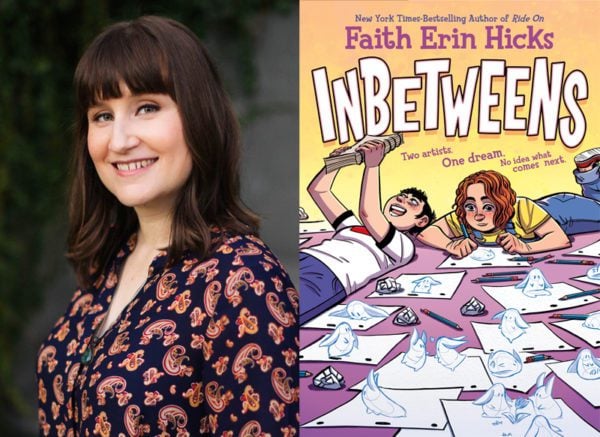
Faith Erin Hicks’s graphic novel Inbetweens is both a nostalgic throwback for ’90s kids and a deeply relatable story for creatives of all generations. Before they enter high school, artistic twin sisters Sloane and Ash have been accepted into a six-week program at Canada’s most prestigious animation college for the summer.
The story is set in 1999, and the twins’ assignments involve hand-drawn sketches and flip books rather than illustrations created by contemporary animation software. Hicks’s artwork effectively conveys the dynamism and exuberance of hand-drawn animation; a page where a classmate dances with her animated flour sack is an irresistible call to dance along.
The ever-fluctuating gap between enthusiasm and skill is a theme that will resonate with all artists, and Hicks’s story explores this well through the perspectives of her teenage protagonists. Ash’s dreams of learning from famous animation artist Douglas Frye are dashed, along with her confidence, when he dismisses her work as too unfocused. The harder she works to impress him, the less joy she feels in the art form she once loved.
In contrast, Sloane’s anxieties about the program prove unfounded, as she makes friends faster than she anticipated. However, she learns she doesn’t enjoy animation as much as she thought she would, and worries what that could mean for her future career prospects.
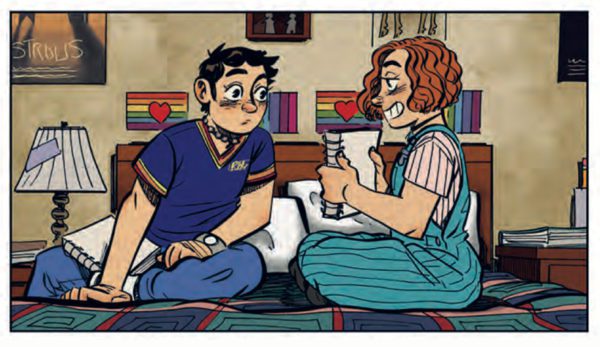
Illustration: Faith Erin Hicks.
Both twins also learn about the racism and sexism in the animation industry. Most of their classmates are boys who call anime “ugly” and their teacher Lisa Sato’s stories of growing up Asian in Toronto “boring.” Their friend Nisha’s work is praised by Frye until he learns she’s the artist and immediately starts finding fault with it.
The story covers the many internal and systemic barriers artists face, but ultimately strikes a hopeful chord. Contemporary readers know that characters’ scorn for Nisha’s love of Studio Ghibli is long outdated; the company is now widely successful even in Western mainstream media. And while Asian women animators like Ms. Sato and Nisha still face systemic barriers, they’re also producing mainstream international hits like Turning Red and KPop Demon Hunters.
And the twins’ thoughtful and whimsical final group project, dismissed by classmates as “boring,” is clearly much more sophisticated than the fart joke shorts of their critics, moving the audience to tears. Like the twins’ film, Hicks’s story will resonate with young artists, and hopefully provide some courage to share their spark with the world.




 Contact us via email