Credit: Courtney Molyneaux
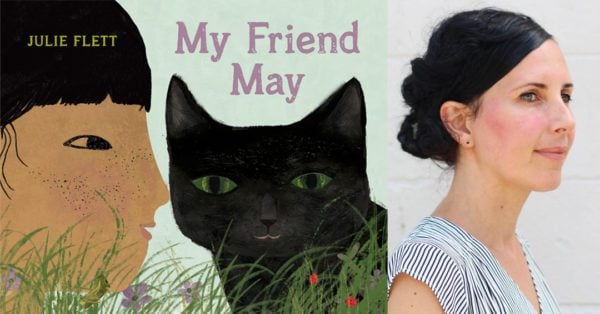
My Friend May by Cree-Métis author and illustrator Julie Flett is the based-on-a-true-story tale of May, Margaux, and Margaux’s aunt. May is Margaux’s cat and best friend, but one day she goes missing, leaving Margaux distraught just as her aunt – whom Margaux calls Nitôsis, the Cree word for “my aunt” – is moving to the city. Nitôsis and Margaux look for May, but can’t find her before the move. Margaux is left missing two beloved figures in her life, with no sign of where May is, at least until Nitôsis starts unpacking in the city and hears a meow – May fell asleep in a moving box and made an accidental road trip. The story ends happily with May and Margaux reunited and Flett encouraging readers to tell stories of the felines in their lives, whether that be of their own pet, a neighbourhood stray, or a family friend’s cat.
The book is beautifully illustrated. Flett uses a muted colour palette that balances the anxious wondering of where May went with a cozy, familial feel. The collage images in the book are full of personality and texture, despite the relatively simple and sparse shapes used. The characters – especially May – are very evocative; it’s easy to get invested in their story.
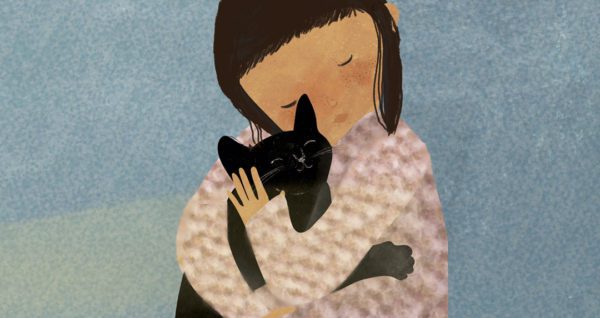
Flett once again includes language backmatter, as in her previous work. In addition to further explaining Cree terms for friends and family – nitôsis means your mother’s sister, not just “aunt” – Flett also lists the names of objects and concepts scattered throughout the book. For example, an illustration shows Margaux and her mother sitting under a “blanket” (akohp), while later, Nitôsis wraps May up in a blanket to “go home” (kiwêwin). The additional vocabulary in the book adds to the book’s interactivity.
My Friend May is an excellent read aloud and learning tool for young readers. Although the element of uncertainty around losing May could be distressing to some readers, ultimately the book is a heart-warming story and an excellent language-learning resource.




 Contact us via email