l to r: Louise Flaherty, Neil Christopher, and Kagan McLeod.
Nyla and Sima’s family, like many Inuit families, is spending the winter in outpost camps. For Nyla and Sima, the days indoors are long, and they pass the time by playing string games. The two soon become so obsessed with the games that they stop helping around the camp. Seeing this, their Nanngaaq (grandmother) decides to share the story of Tuutarjuk, the spirit of string figures. A warning that if they do not listen, Tuutarjuk may appear at night with a challenge, and if they lose, he may take them away.
Nyla, who believes the story to be a silly tale, becomes quite arrogant and boastful. Her mother tells her she should not play string games for a few days, but Nyla defies her mother’s orders and begins playing with her string. And, just as Nanngaaq had said he would, Tuutarjuk appears and the contest begins.
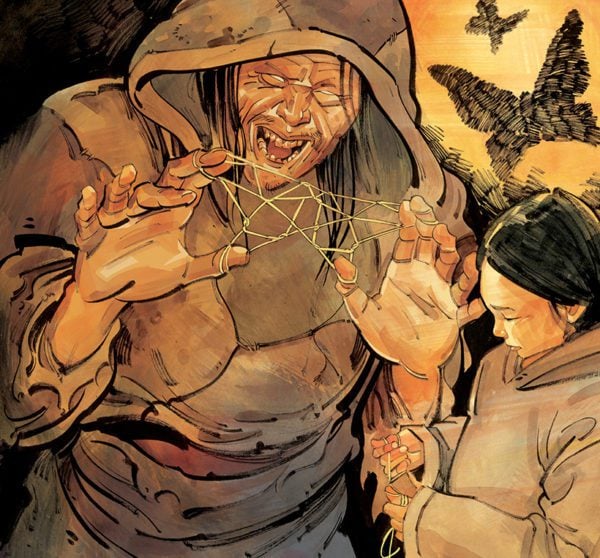
Illustration: Kagan McLeod.
Tuutarjuk is written in both Inuktitut and English, making it a valuable tool for language learning and revitalization. This harrowing tale, like other books by Louise Flaherty and Neil Christopher, carries a powerful warning for children about the importance of staying safe and respecting their Elders, while also highlighting the wealth of experience and knowledge the Elders carry.
Kagan McLeod’s high-contrast illustrations, dominated by blacks, browns, and greys, are perfectly balanced by the soft golden light of the qulliq (oil lamps). Together, they capture the feeling of a long winter night in the family qarmaq (sod house) and accentuate the terror woven throughout the story.
This book is a gripping horror story for young readers that offers thrills while also imparting important cultural lessons.




 Contact us via email