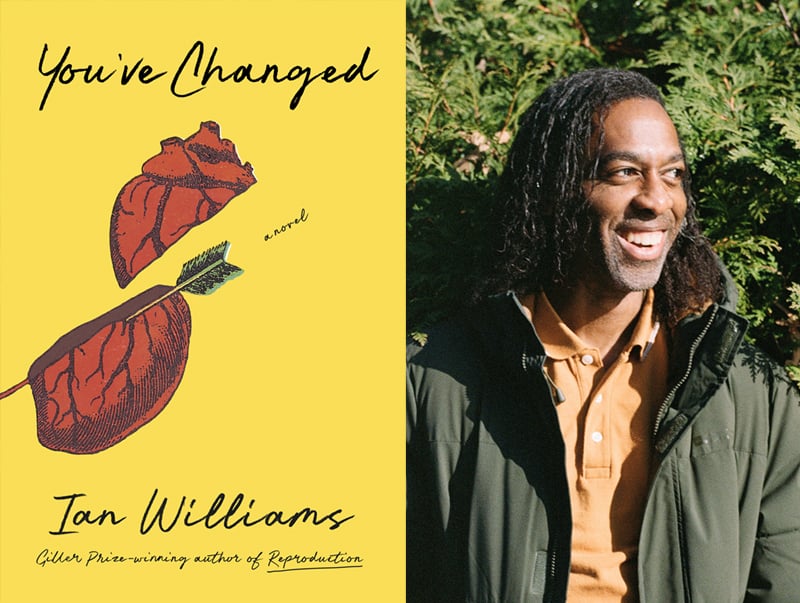
Ian Williams (Zackery Hobler)
“You’ve Changed,” a 1942 song recorded by Billie Holiday, Sarah Vaughan, Marvin Gaye, and dozens of others, ends with the miserable, if resigned, lines: “No need to tell me that we’re through / It’s all over now / You’ve changed.” The sorrowful tune provides a direct guide to the character of Beckett in Ian Williams’s new novel, a guy in early middle age who is conflicted to his very core. He is damaged by family history. Beckett’s rebellion against the heavy-handed upbringing in Maine by his religious father was, Williams writes, “conformity: a house, a registered truck, government documents, a pagan Christmas tree, a premium cable package, now a wife.” Contending with business failures, meaningless jobs, unemployment, and a romance where he was “indicted for being unavailable, unaffectionate, and unnecessary,” Beckett has compiled a playlist with every recorded version of the song. As theme songs go, Beckett’s definitely prepares him (and the reader) to expect the worst.
As the second novel by the Giller Prize–winning author of Reproduction opens, Beckett and Princess, a former Detroiter (by way of Spain and Côte d’Ivoire), who is “good at being right,” have been married for nearly two years. For this “sham of a marriage” divorce seems certain, and a joyless anniversary is guaranteed. In “Guests,” the lengthy first part of You’ve Changed, a happily married couple’s visit heightens the embattled state of Beckett and Princess. She’s unsatisfied, he’s unsatisfied. Both take issue, nurse wounds, act out, escalate, sulk, brood, complain, accuse, criticize, justify, react, and prescribe. Naturally, they circle back to earlier arguments that remain unresolved.
The situation might be a dream challenge for a marriage counsellor; for readers, however, who are subjected to a series of variation-on-a-theme arguments, the experience is discomfiting and, in truth, not entirely absorbing. Quarrels day after day do not add up to much by way of plot. And while Princess’s psychological investment in physical fitness and cosmetic surgical procedures, not to mention the miasma of Beckett’s depression and his “studies in denial,” is intriguing material, 100 pages of domestic strife is a big ask from any writer. Throughout, Williams’s typographical novelties – unfinished sentences, faded text, a section where words related to sex are redacted – act as a sort of marginalia for ideas that the novel makes amply clear.
When Princess leaves their home in Vancouver for face and buttock surgeries in Costa Rica, Beckett’s fledgling friendship with renovation client Viv leads him to an unexpected tryst with a man nicknamed Gluten. A social media influencer, he is a handful, and suspected of being addicted to methamphetamines. As the bromance – related in first-person narration in the novel’s second part, titled “Guest” – crosses a line into romantic feelings and sexual experimentation, Beckett’s potential for personal growth runs directly into conflict with his bone-deep need to identify as traditionally “married.” Williams writes a kind of buddy comedy here, though one where the laughs dwindle as the men flounder at articulating their desires. Steeped in heteronormativity, the men find their “trap of desire” unnavigable; its collapse is a fait accompli.
With the return of Princess, whose rage at Beckett’s infidelity takes the form of frequent emasculating and homophobic put-downs, readers without the stomach for further animus might wish the characters well and hope they have the sense to go to their separate corners, pack their bags, and leave in different directions. (Spoiler: they do not.) Differences might be irreconcilable in Williams’s marriage story, but glimmers of hope ensure a prolonged tale that’s neither short nor sweet.




 Contact us via email