However we want to define it, art would exist without money. In this book, I’ve been exceedingly broad in my definition of art – poetry, theatre, painting, prose, dance, music (both performance and recording), film, television, and YouTube all factor in. All of them have at times, sometimes concurrently, been both art and not art. But there’s never been anywhere that people didn’t paint and dance and tell each other stories.
Artists absolutely wouldn’t exist without money, though. By the rules of money, it’s just like any other job: it’s defined, refined, and determined by who’s paying. As you might have guessed from what I consider art, I’m tempted to be liberal with the term ‘artist.’ But even then I would have to define it against the basic logic of money: you are an artist if you get paid to make art. Anyone at all can make art, but you only get to call yourself an artist if you’re paid for it. That reads like a tautology to an economic mind but feels disgustingly restrictive to the creative one. The creative mind, however, doesn’t matter here: people are paying for art because it gives them status, confirms their position in society, affirms their impeccable taste. They are not honouring the artist’s talents or spirit or creative spark – though some of the first people to start paying artists well insisted that the importance of honouring such qualities was the reason art was worth what they were paying.
Art began as a way to honour the gods, or whatever animating spirit we once believed in, and artists almost universally began as instruments to honour the gods. Richer people began paying them as a way to prove their pious devotion to gods, which incidentally was quite a good way to justify all the money they had. Both of those justifications survived for a very long time. Gradually, practising art became a way to signify an enlightened soul, and paying artists became a way to signify an enlightened soul who couldn’t make art but did have money. The term ‘artist’ was created by people of immense wealth, power, and position to justify that wealth, power, and position, and it was accepted by artists to justify their fees or, where those weren’t high enough, prestige and position.
That basic dynamic has remained the same, even as power, wealth, and position have gotten a little more diffused. Now governments pay artists to prove the strength of their national or cultural character, to justify their existence as recognizable states with traditions and meanings of their very own. Art has been turned over to the market, and some artists now create industrial-level products that support vast interconnected webs of jobs. Entire art industries are buoyed by the still-intact prestige of the artist, even as those same industries use that prestige as leverage to spread the money an artist generates further and further away from the artist. The term ‘artist’ has lived up to its restrictive simplicity, often excluding entire ways of creating and huge numbers of creators because no one found it useful to justify paying them. The financial understanding of the term has so clouded our view that we have trouble understanding something as art unless it’s been made by an officially recognized artist. Once you were an artist because you were paid to make art; now you’re not regarded as making art unless you’re being paid for it. Money has come to define the whole thing. One of the easiest ways to tell what new kinds of art are emerging – to figure out who will be elevated into the realm of artist – is to figure out which kinds of creative acts people are getting paid more for; ‘follow the money’ works as well for artists as for any other aspect of contemporary life.
Artists have always followed from money: its locus of power, prestige, and influence grants them whatever legitimacy they have. Money created the concept of artists, sustains their ideal, and allows them to cling to this vaunted self-definition for as long as they are useful to the people who control the money. It might be fun for us to debate what really is an art form and which practitioners really are artists, but the answer bludgeons us with cold simplicity: art is what the people who pay for art say it is, and artists are the people they pay for it. Anything else is an argument in search of a patron.
David Berry is a writer, editor, and critic whose work has appeared in the National Post, the Globe and Mail, The Walrus, CBC, Hazlitt, and other publications. He is the author of one previous book, On Nostalgia.
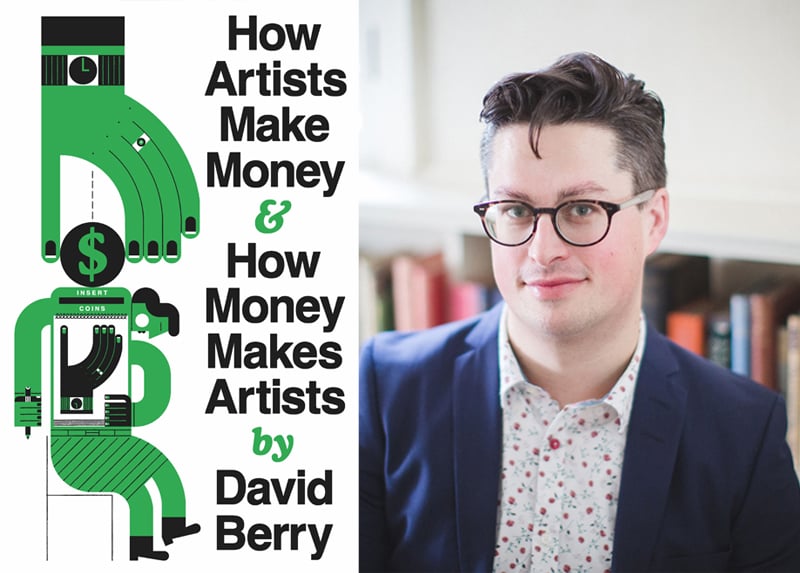
Excerpted from How Artists Make Money and How Money Makes Artists by David Berry. Copyright © 2025 by David Berry. Published by Coach House Books. Reproduced by arrangement with the publisher. All rights reserved.
How Artists Make Money and How Money Makes Artists published on Oct. 14.



 Contact us via email