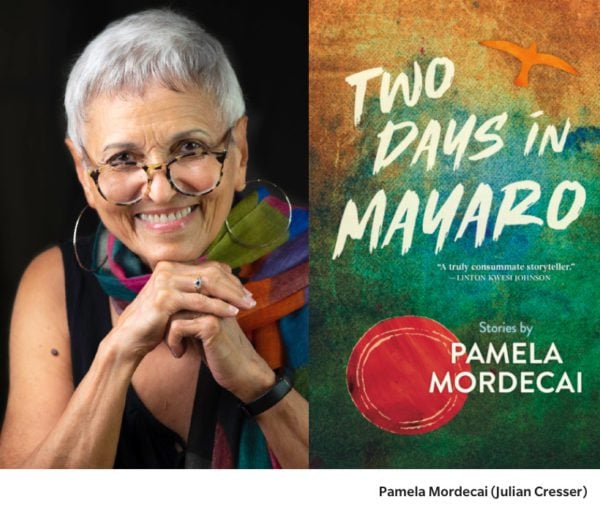
Jamaican-Canadian Pamela Mordecai’s collection Two Days in Mayaro is steeped in the centuries-long economic, political, and cultural exchanges between Canada and Jamaica. From individual migration stories, such as that in the linguistically playful “Alvin’s Ilk Rides the Subway” (“Alvin have the ilk from he first know himself. For most of that time, he never even know what it is.”), to major movements of people, such as the 18th-century deportation of part of the Afro-Indigenous Maroon nation from Jamaica to Nova Scotia, Jamaica and Canada are historically close like batty an bench.
The deportation of the Maroons is alluded to in Mordecai’s First World War ghost (duppy) story “Jeremiah Jones,” featuring Jones, the historical Black Canadian soldier who lied about his age (58) in order to enlist in the Canadian army. Old-stock Canadians of the day were concerned that the army was becoming too woke and they protested vehemently against the enlistment of Black men.
Duppies make recurring appearances throughout the book, including in “Duppy Business,” “Didi’s Chaise,” and “Music Fans from the Blue,” bringing Afro-Jamaican folklore to a broader audience in ways similar to Zalika Reid-Benta’s fine 2023 novel River Mumma. (Mordecai, who was born and educated in Jamaica, also infuses her work with generous doses of the Jamaican language.) The role of the duppy in Jamaica is complex. They can be didactic teachers of moral lessons, as in Dickens’s A Christmas Carol. In “Didi’s Chaise,” the restless spirit of an ancestor must teach her descendant a lesson in the respectful use of Afro-Jamaican spiritual science. Duppies can also serve as a powerful antagonistic force. In the aforementioned “Jeremiah Jones,” a Jamaican soldier stationed in England faces off against “Old Higue,” a vampiric bogeyman figure similar to the titular character of David Chariandy’s Soucouyant.
Jamaica has intercommunity differences, but the Africans, Asians, and Europeans who live on the island have mostly figured out how to live together without constant inter-group antagonism. Jamaicans manage this without what the protagonist of the story “Goat Mouth” calls “the Political Correctness Police.”
“Goat Mouth” (a Jamaican term translating roughly to “jinxing”) features a Jamaican mother with a chattymout, who is chastised by her Canadian-born son for calling people “red folks” in reference to Jamaicans with light reddish-brown skin, often with freckles.
“I know this is Canada …” mom says, “I also know God make people different. Don’t they act different and have different personality? Well they look different too. … You think anybody can make me fraid to describe what God make?”
Impeccable yaad logic: linguistic shorthands don’t say anything about who is part of our community. Frankness without cruelty is one of Jamaica’s many gifts to the world. Mordecai draws on the rich culture, whether in Jamaica or in Canada, with her range of diverse, forthright characters.
The undisputed star of the collection is the title piece, “Two Days in Mayaro.” In a collection full of duppy tales, this story manages to haunt without resorting to spirits – haunting us only with the ghosts of life’s unchosen alternatives. An old man living out his days in a care facility replays in his mind the two days long, long ago, during which everything in his life changed. There’s nothing more frightening than regret. It is a powerful conclusion to an excellent and significant contribution to Jamaican and Canadian literature.
This article contains affiliate links. Quill & Quire has partnered with Booksellers.ca, a network of more than 180 independent bookstores across Canada, so we may earn a small commission when you purchase through links on our site — at no additional cost to you. More about Booksellers.ca.




 Contact us via email