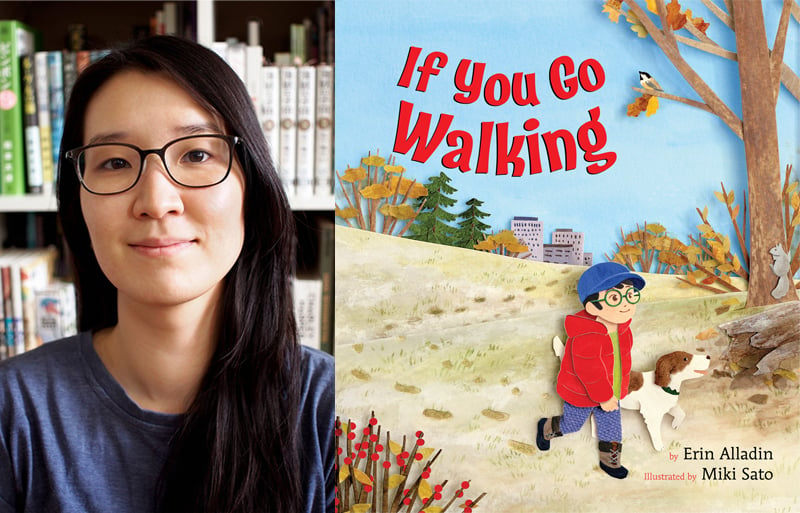
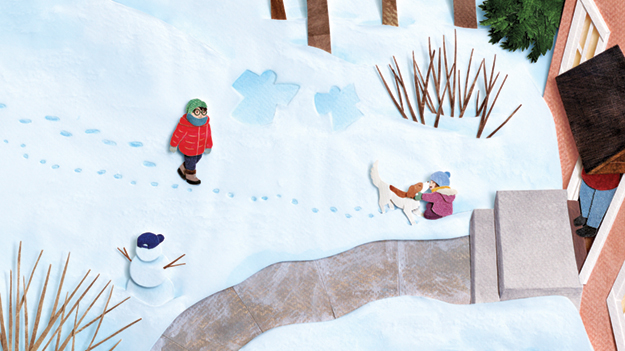
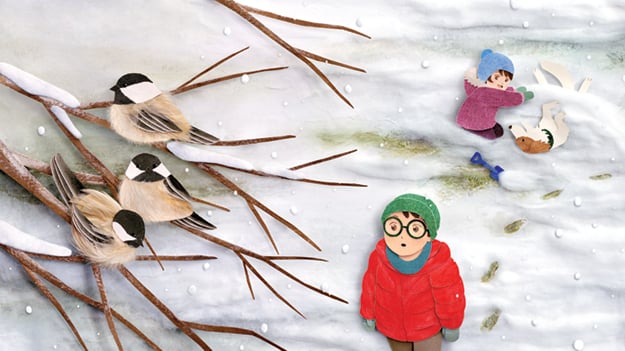
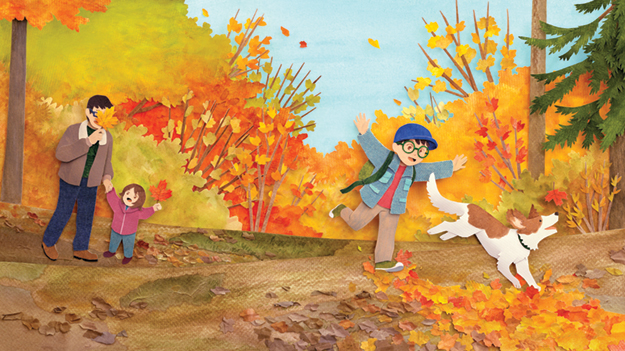
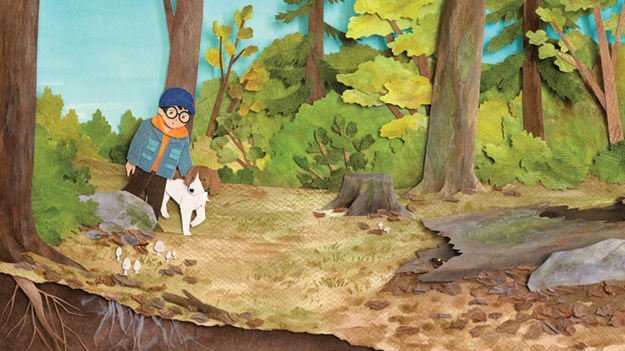
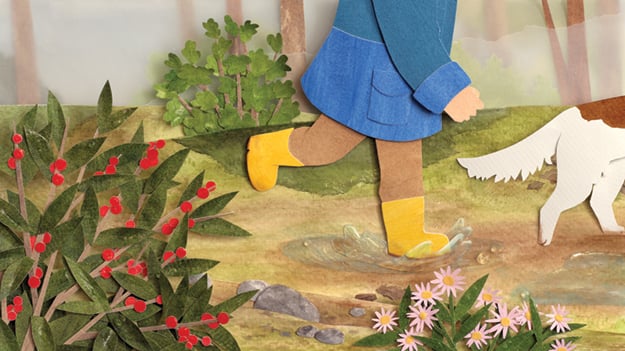
Miki Sato is an illustrator who creates three-dimensional art using different materials and textures. Her work includes Snow Days, which was a finalist for the Elizabeth Mrazik-Cleaver Canadian Picture Book Award, and Chidori. Her latest picture book, If You Go Walking (Pajama Press, Nov. 4) follows a young child’s thread of questions about the world around them.


What sparked your interest in illustration?
When I was younger, I was always creative. I was always making art and crafting. It came naturally to me.
Who or what has been a major influence on your illustrating style?
I grew up with Japanese culture and media – comic books, anime, and animated movies, which got me into drawing.
Then, there’s Barbara Reid, who uses Plasticine for her illustrations. I had one of her books growing up, and I thought it was so cool that you could create art that’s not just painting or drawing. You can make something three-dimensional.
How did you come to choose paper as your medium?
When I was younger, I would do a lot of crafts, and I had one of those kits for decoupage – where you can print out multiple copies of the same image, cut out the shapes, and glue them on top of one another. I feel like that sparked the idea to create three-dimensional things like Barbara Reid’s work.
Did you know from the outset that you wanted to illustrate children’s books?
No, I knew it was a thing, and I thought it would be really cool to do, but I didn’t think I was really cut out for it. I was doing editorial illustrations for magazines, but then, out of the blue, Owlkids Books emailed me asking if I wanted to do a picture book. And, of course, I said yes. The book was Golden Threads by Suzanne Del Rizzo.
When a project such as If You Go Walking crosses your desk, where do you begin?
I first print out the manuscript and read it, closing my eyes along the way to see if anything really jumps out to me. When something does, I scribble it down as a rough sketch. There’s a lot of thinking during this stage. I have to think about not only how I’m going to draw something out, but also how I’m going to make it. I have to make sure that it’s physically possible.
Can you take us through the process of illustrating a page from the book?
I start off with everything drawn precisely on my computer, and then I print it out, because I use that printout as the base for the illustration. Once I know what’s going to be paper and what’s going to be fabric, I go through my box of materials and pick and paint all the pieces in the colours I’ve chosen. Depending on how complex the illustration is, a page can take three to seven days.
Are there any mediums that you haven’t tried that you would like to try in the future?
I’m always looking for new mediums to put into my work. On a personal level, I want to learn how to oil paint. I’ve never properly worked with oils. Just recently, I started to learn how to knit, and I’ve been thinking of how I can add knitting to my illustrations.
What do you do to nurture your passion for illustration?
It may seem counterintuitive, but taking a step away. Doing other things, such as my knitting, makes me excited to illustrate again. Also, going for a walk, which is when I’ll see something, maybe a flower, and wonder how I would go about illustrating it. I think time away from illustrating actually makes it more enjoyable.
What do you hope young readers take away from If You Go Walking?
To be curious about the world around them. To be like the main character in the book and go out and question things, ask why things are the way they are.
If you could illustrate any classic children’s book, which would it be?
A Japanese fairy tale. There’s one called The Tale of Princess Kaguya. It’s about a little girl who’s found in a bamboo shoot.
This interview has been edited and condensed.
Read Q+As with Lauren Tamaki and Nahid Kazemi.




 Contact us via email